Peru’s public and private ports handled 29,685,373 metric tons (MT) of cargo between January and May 2026, according to figures released by the National Port Authority (APN), an agency under the Ministry of Transport and Communications (MTC).
Of the total cargo handled, 29,521,580 metric tons, or 99.4%, moved through maritime terminals, while river terminals handled 163,793 metric tons.
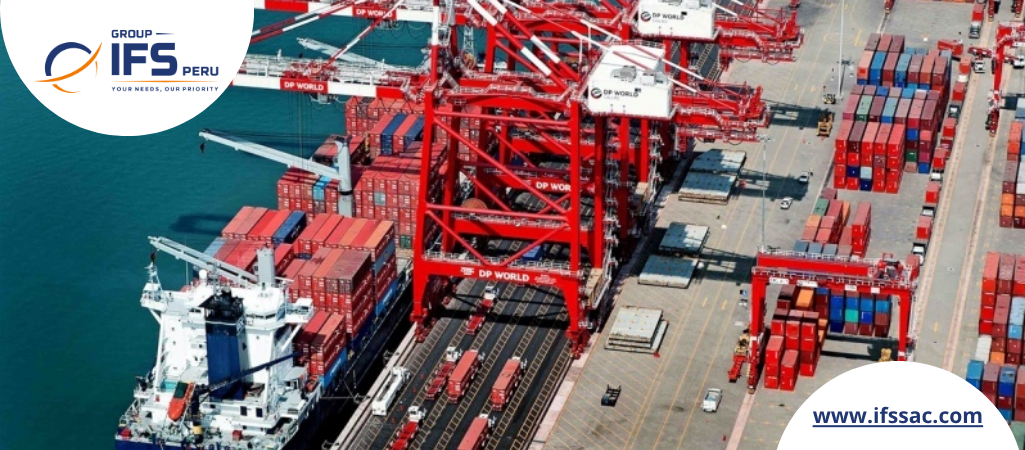
The Port of Callao maintained its position as Peru’s main port hub. The South Container Terminal, operated by DP World Callao, handled the largest cargo volume with 9,252,074 metric tons, followed by the North Multipurpose Terminal, operated by APM Terminals Callao, with 7,969,229 metric tons.
Outside Callao, the highest cargo volumes were recorded at the Port of Matarani, with 3,479,935 metric tons; the Chancay Multipurpose Port Terminal, with 2,361,858 metric tons; the General San Martín Port Terminal in Paracas, with 1,949,066 metric tons; the Port of Salaverry, with 1,568,731 metric tons; the Port of Paita, with 1,377,046 metric tons; and the Mineral Concentrates Loading Terminal, with 1,319,724 metric tons.
Container Throughput
During the first five months of 2026, Peruvian ports handled 1,718,531 TEUs. Of this total, 1,712,558 TEUs were handled at maritime terminals, while 5,973 TEUs moved through river terminals.
The South Container Terminal at the Port of Callao led container traffic with 894,872 TEUs, followed by the North Multipurpose Terminal at Callao, with 481,240 TEUs.
It was followed by the Chancay Multipurpose Port Terminal, with 164,221 TEUs; the Port of Paita, with 134,072 TEUs; the General San Martín Port Terminal, with 32,104 TEUs; and the Port of Matarani, with 5,855 TEUs.
Within the river port system, the highest container throughput was recorded at the Logística Peruana del Oriente (LPO) Port Terminal in Pucallpa, which handled 4,092 TEUs. It was followed by the Júpiter Terminal, with 1,739 TEUs, and the Yurimaguas Nueva Reforma Port Terminal, with 142 TEUs.
Fuente: Mundo Marítimo