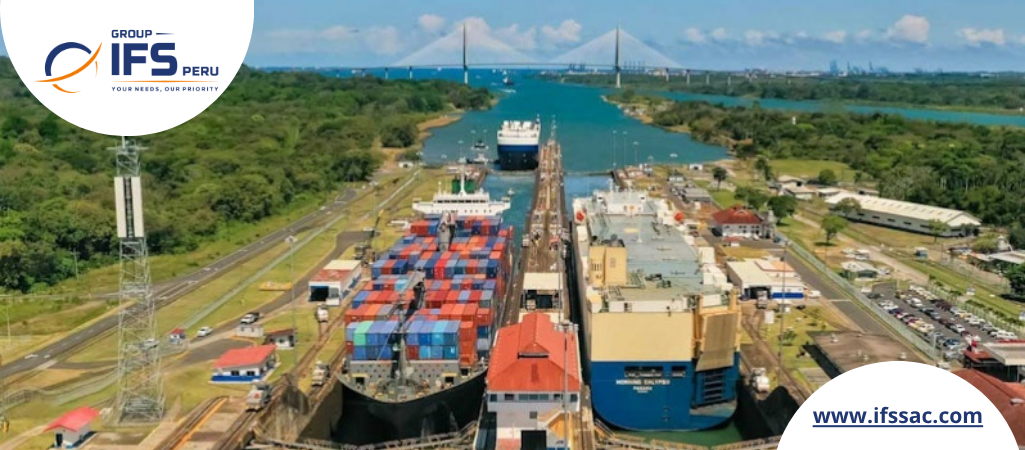
The Panama Canal reported an increase in both vessel transits and cargo volume during the first half of fiscal year 2026, along with rising demand for its booking system. The update was shared during a market briefing hosted by the authority and moderated by Anna Milne, with participation from Canal Administrator Ricaurte Vásquez, Deputy Administrator Ilya Espino de Marotta, and Vice President of Finance Víctor Vial.
Between October 2025 and March 2026, the Canal recorded 6,288 transits, representing a year-on-year increase of 224 movements. During the same period, a total of 254 million CP/SUAB tons were transported, approximately 5% higher than the 243 million tons recorded in the previous period.
In recent months, daily averages reached 34 vessels in January and 37 in March, with some days exceeding 40 transits.
Canal Administrator, Ricaurte Vásquez, noted that “amid ongoing geopolitical challenges, changes, and various factors affecting global trade, the Panama Canal remains open and reliable. Especially at this time, with water levels at optimal conditions, we are able to accommodate an increasing volume of traffic”.
He also highlighted strong performance in container traffic and liquefied petroleum gas (LPG), adding that “energy-related cargo is playing an increasingly important role in the volumes we are handling”.
Regarding the booking system, the Canal Authority explained that most vessels schedule their transit in advance, helping to avoid queues and provide greater predictability for customers. Available mechanisms include the Long-Term Slot Allocation program and the 1A booking system for liquefied natural gas (LNG) vessels.
For ships without prior reservations, options such as last-minute bookings and auctions remain available, with between three and five slots offered daily. According to Víctor Vial, some auction slots have exceeded $1 million amid rising demand.
Before the Middle East conflict, the average value of these auctions ranged between $135,000 and $140,000. Between March and April, however, this increased to approximately $385,000. These auctions are conducted within specific time windows and do not affect the transit schedule or vessels with confirmed bookings.
In terms of water availability, Deputy Administrator, Ilya Espino de Marotta, stated that preventive measures have been implemented in response to the potential impact of an El Niño event. She also noted that Gatún and Alhajuela lakes remain at maximum levels due to rainfall recorded during the dry season.
“We do not expect any significant changes between now and December, but we continue to monitor conditions closely and aim to keep the lakes at the highest possible levels ahead of the next dry season”, Espino de Marotta concluded.
Source: MundoMaritimo